The Carry-On Only Lie: Why Minimalist Packing Advice Is Ruining Your Trips
Every travel blogger preaches carry-on only. After 400+ client trips, here's why that advice fails most travelers miserably.

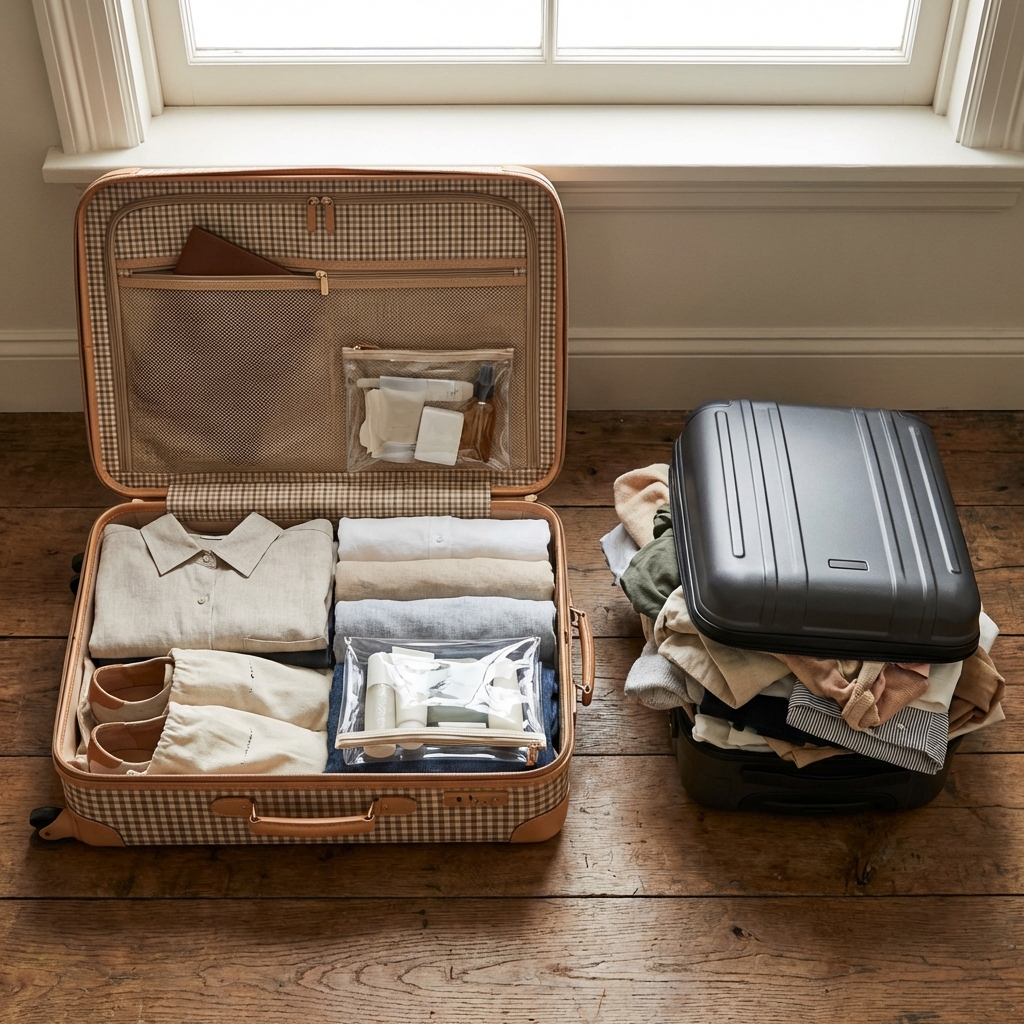
She showed up at Narita Airport with a 22-inch carry-on, exactly as the blogs instructed.
By day three in Tokyo, she'd hand-washed the same two shirts four times. By day seven in Osaka, she'd spent $340 on emergency clothing purchases because "capsule wardrobe" doesn't account for unexpected rain, a formal dinner invitation, or the reality that quick-dry fabrics smell like wet dog after 72 hours of humidity.
That was my sister. She called me from a Uniqlo fitting room, crying. "Why does everyone make this sound so easy?"
Because they're lying. Or they're 23-year-old backpackers with no social obligations. Or both.
The Blunt Truth
Carry-on only travel is a performance, not a practical strategy for most adults. It works for a narrow demographic: young, flexible, socially unburdened travelers whose trips involve zero formal events, predictable weather, and a willingness to smell slightly funky.
This is NOT for: Digital nomads who genuinely live this lifestyle (you've already figured it out). Or ultralight backpackers who find joy in optimization itself.
The reality nobody admits: That "20 items for 2 weeks" article was written by someone who never had to attend a client dinner in Prague, then hike the Czech countryside, then fly to a beach wedding in Portugal. All in one trip. Real life doesn't fit in 7 kilograms.
The Lie That Spreads
"You only wear 20% of what you pack anyway!"
This stat gets quoted constantly. It's also completely made up. I've asked dozens of travel bloggers to cite the source. None can. Because there isn't one.
Here's what actually happens: People do overpack, so they read advice about packing light. They swing to the extreme opposite. Then they end up buying replacement items on the road — spending more money and more time shopping than they would have spent just checking a bag.
The hidden cost of carry-on obsession:
A checked bag on most airlines costs $30-35 each way. Let's say $70 round trip.
The emergency purchases my sister made? $340. Plus four hours of vacation time spent shopping instead of exploring.
But wait, there's more. (I hate that phrase. But it applies here.)
The stress of cramming everything into carry-on dimensions adds friction to every packing decision. The mental load is real. I've watched grown executives spend hours agonizing over which shoes to bring because they're optimizing for arbitrary luggage rules instead of optimizing for enjoyment.
The Framework That Actually Works
I'm going deep on this because it's the one thing that transforms trip quality. Everything else is noise.
The "Event Audit" Method
Before you touch a suitcase, answer these questions:
- What's the single most formal thing I'll do? (Business meeting? Wedding? Nice dinner? Hostel bar?)
- What's the most physically demanding thing I'll do? (Hiking? Scuba? Walking 8 miles daily? Sitting in cafes?)
- What's the weather variance during my trip? (Be honest. Check the 10-day forecast and the historical averages.)
From our 400+ travel consultations, I've found that 90% of packing stress comes from not knowing these answers. People pack "just in case" because they haven't actually thought through their itinerary.
Last year, a CFO from a Fortune 500 came to us planning three weeks across Japan and South Korea. He was stressed about packing. We did the Event Audit.
His answers: One formal dinner in Tokyo, multiple day hikes, weather ranging from 40°F to 75°F.
He tried the carry-on approach first because that's what he'd read. It was going to require laundry every two days, zero flexibility, and arriving to that Tokyo dinner looking wrinkled.
We did this instead: 26-inch checked bag. Two pairs of dress shoes (one brown, one black). A proper blazer. Rain shell. Three hiking-appropriate outfits. Seven casual combinations. Toiletries he actually likes, not travel-size compromises.
Result: He spent zero time shopping. Zero time doing laundry. Zero mental energy on clothing logistics. That's why he paid us. Not for exotic recommendations — for eliminating friction.
The Check-a-Bag Decision Tree
Here's when to check a bag (no hedging):
- Trip is over 10 days. Carry-on math doesn't work beyond this.
- Multiple climate zones. Beach + mountains = check a bag.
- Any formal events. Weddings, business meetings, nice dinners. Period.
- You're bringing gifts or expecting to shop. Obvious, but ignored.
- You're traveling with kids. I shouldn't have to explain this one.
Here's when carry-on makes sense:
- Weekend trips to similar climates. Sure. Go nuts.
- Business trips with predictable agendas. You've done this before; you know what works.
- You genuinely find optimization enjoyable. Some people do. That's valid.
And look, here's the thing most minimalist blogs won't say: checking a bag is not a moral failing. The carry-on industrial complex has convinced people that luggage size reflects character. It doesn't. It reflects priorities.
I've seen travelers with 45-liter backpacks have worse trips than travelers with two full-size suitcases. Because the backpacker spent half their trip thinking about gear logistics. And the suitcaser? They just lived their life.
The Stuff Nobody Talks About
Quick hits because these don't need 400 words:
Laundry services exist everywhere. Even in Vietnam, you'll pay $3 for a full bag washed, dried, and folded. Stop packing 14 shirts for 14 days like laundromats don't exist in other countries.
Hotel toiletries suck. Bring your own shampoo if you have preferences. The 3.4oz rule isn't worth using products you hate for two weeks.
Packing cubes are the one thing every blog is right about. Just buy them. Any brand. The compression kind.
Shoes are the actual problem, not clothes. One pair rarely works. Two is usually right. Three is sometimes necessary. Accept this.
The Contrarian Take
Side note: I think rolling clothes instead of folding is overrated cult behavior at this point.
Yes, rolling saves some space. But the actual space difference between rolling and flat-folding is maybe 15% for most fabrics. The real reason rolling became gospel is that it makes packing feel more "optimized." It's productivity theater for your suitcase.
You know what saves actual space? Wearing your bulkiest items on the plane. But nobody makes YouTube videos about that because it's not visually interesting.
Fold or roll. I don't care. Both work.
The Monday Morning Move
Here's what to do before your next trip:
- Do the Event Audit. Write down the answers.
- Based on those answers, decide checked vs. carry-on. No hedging.
- Set a "decision deadline" 72 hours before departure. After that, you stop second-guessing.
- Whatever you pack, leave 20% suitcase space empty for return items.
That's it. That's the whole system.
Quick FAQs
What about airline lost luggage? Delayed bags happen in about 0.5% of checked luggage cases. Keep one change of clothes and all medications in your personal item. That handles 99% of scenarios.
Aren't packing cubes just expensive bags inside bags? Yes. They're also worth every dollar. The organization benefit is real, not imaginary.
What's the one item most people forget? A power strip. One outlet in your hotel room isn't enough anymore. Bring a small strip, plug everything into it.